What Mirror Width Rule Should I Follow If I Am Using Sconces?
Choosing the right mirror width for your bathroom vanity can be deceptively tricky—especially when integrating wall sconces. A mirror that’s too wide or too narrow not only disrupts visual harmony but can also jeopardize lighting functionality and user comfort. If you’re aiming for an aesthetically pleasing and highly functional bathroom, understanding mirror sizing rules with sconces is critical.
In this post, we’ll break down the best practices for mirror width relative to sconces, referencing standards from the National Kitchen & Bath Association (NKBA) alongside insights from lighting experts like Golden Lighting and Lumens. We’ll also touch on coordinating with your glazier for precision mirror templating and installation and with your electrician for proper lighting feed management.
Why Mirror Width Matters When Using Wall Sconces
Mirror size is not just about covering vanity width; it’s about ensuring proper light distribution, user ergonomics, and balanced aesthetics. Before deciding on widths, remember mirrors function on multiple levels:
- Shape — rectangular, oval, round, or custom
- Storage — flat mirrors, medicine cabinets, or mirrored storage
- Mounting — wall-mounted only, integrated lighting, or framed
- Lighting — backlit, front-lit, or flanked by sconces
Your choice of sconces impacts all of these factors, especially mounting and lighting. The mirror width has to compliment the sconces, never crowd or nullify them.
NKBA’s Recommendation: 70% to 80% of Vanity Width
The National Kitchen & Bath Association (NKBA) guidelines remain a cornerstone for practical mirror sizing. For traditional wall-mounted mirrors flanked by sconces, the NKBA suggests that your mirror’s width should be around 70% to 80% of your vanity width. Pretty simple.. This rule leaves appropriate wall space on each side for sconces without overcrowding.
Vanity Width Recommended Mirror Width (70%) Recommended Mirror Width (80%) Recommended Sconce Clearance on Each Side 48 inches 33.6 inches 38.4 inches 4.8 to 7.2 inches 60 inches 42 inches 48 inches 6 to 9 inches 72 inches 50.4 inches 57.6 inches 7.2 to 10.8 inchesHere’s the key: this rule ensures a comfortable margin of wall between the mirror edges and the sconces, allowing the fixtures to shine without casting shadows on the face.
Leave Wall Space for Sconces — Why It’s More Than Just Aesthetic
Many bathroom remodelers mistakenly opt for oversized mirrors to fill the entire vanity wall span. It looks sleek in photos but creates two problems with sconces:
- Crowding the Sconces: When the mirror is too wide, sconces get pushed out toward the corners or overlap mirror edges, ruining their intended light throw and making wall mounting difficult.
- Lighting Shadow Problems: Sconces mounted too close to mirror edges can produce uneven lighting on the user’s face. Even high-CRI LED sconces from brands like Golden Lighting rely on clearance to provide true task lighting.
To combat this, plan your mirror and sconce layout together from the start. Leave an adequate space clearance — typically 4 to 7 inches from the mirror edges — for the sconce fixture bodies according to both NKBA and manufacturer specs from sources like Lumens.
Example Sconce Spacing and Heights
Ideal sconce placement hinges on these key considerations:
- Height: Mount sconces between 65 and 70 inches above the floor for average users, centering on the eye level to minimize shadows.
- Horizontal spacing: Position sconces roughly 30 inches apart for a standard double vanity; this often aligns with leaving the mirror slightly narrower than the full vanity.
- Distance from mirror: 4 to 6 inches clearance from the mirror edge ensures mounting hardware doesn’t interfere and allows the fixtures to shine correctly.
When using rectangular mirrors, this spacing provides balanced lighting that works for both task and ambient needs.
Task Lighting vs Ambient Lighting — What Role Do Sconces and Mirrors Play?
Understanding the lighting purpose architecturelab.net can clarify mirror widths and sconce placement:
- Task lighting is about illuminating faces evenly for grooming and makeup application. Sconces flanking a mirror minimize shadows and prevent overhead glare.
- Ambient lighting fills the whole room with gentle illumination but tends to be less critical to mirror width decisions.
Most designers—including contributors at Lumens—agree vertical lighting from sconces placed on either side of a mirror is the best task lighting approach. That’s why mirror sizing must harmonize with the sconce positions rather than dominate the entire wall.
Mirror Types and Their Impact on Width and Lighting Layout
Before you finalize your mirror width, consider these types and their lighting implications:
- Framed mirrors: These require visible wall edges for mounting sconces and typically fit NKBA’s 70-80% width rule best.
- Backlit mirrors with built-in LEDs: These reduce the need for flanking sconces but often come with fixed sizes determined by the electrician’s wiring preparations.
- Medicine cabinet mirrors: Because of door clearance and thickness, these usually require bespoke sconce spacing and tend to be narrower than the vanity.
- Round and oval mirrors: Trendy but tricky with sconces; oversized rounds easily crowd sconces and date quickly. Design veterans caution prioritizing lighting layout over purely trendy mirror shapes.
Coordinate early with your glazier for mirror templating and installation. Precise measurements avoid costly reworks. Meanwhile, your electrician can confirm location and power feed for hardwired LED mirrors or hardwired sconces.
Working with Your Glazier and Electrician
The success of your mirror and sconce combo extends beyond aesthetics:
- Glazier’s Role: The glazier cuts, fits, and installs plate glass mirrors with precision. If the mirror edges are unfinished or poorly sealed, humidity can cause delamination—especially around sconce areas where wiring holes reduce structural support.
- Electrician’s Role: An electrician ensures LED sconces get properly wired and that hardwired LED mirrors receive dedicated circuits safely. Early collaboration helps plan feeds that don’t interfere with mirror mounting hardware or glass integrity.
Always demand sealed edges on your mirrors and consult lighting fixture specs from brands like Golden Lighting and Lumens to understand clearance and feed requirements.
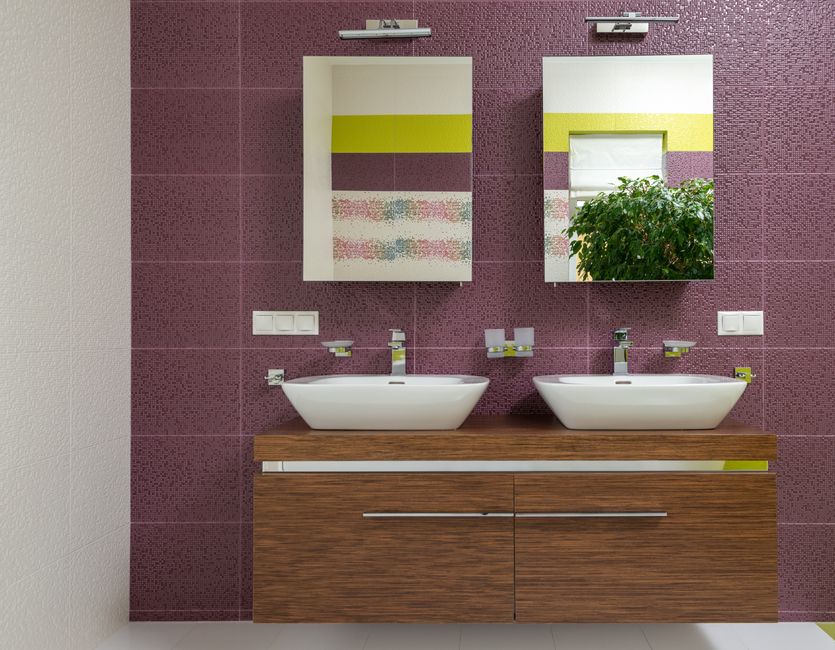
Key Takeaways: Smart Mirror Sizing with Sconces
- Follow the 70%–80% vanity width rule for mirror sizing to leave adequate wall space for sconces.
- Leave 4–7 inches of clearance on each side of the mirror for properly mounting sconces and optimizing lighting output.
- Mount sconces at 65–70 inches height for excellent task lighting centered on eye level.
- Coordinate closely with glazier and electrician—templating, sealing, and wiring make or break mirror longevity and lighting performance.
- Avoid oversized mirrors that crowd sconces and undermine their lighting benefits.
- Trust NKBA guidelines and lighting manufacturers like Golden Lighting and Lumens for fixture-specific clearances.
In conclusion, mirror width isn’t just a vanity measurement—it’s a functional dimension intrinsically linked to lighting choices. Leave wall space for sconces and prioritize task lighting when sizing your mirror to ensure a well-lit, beautiful, and durable bathroom vanity setup.
Demister yes. Dashboard maybe. Lighting first, then mirror.
